
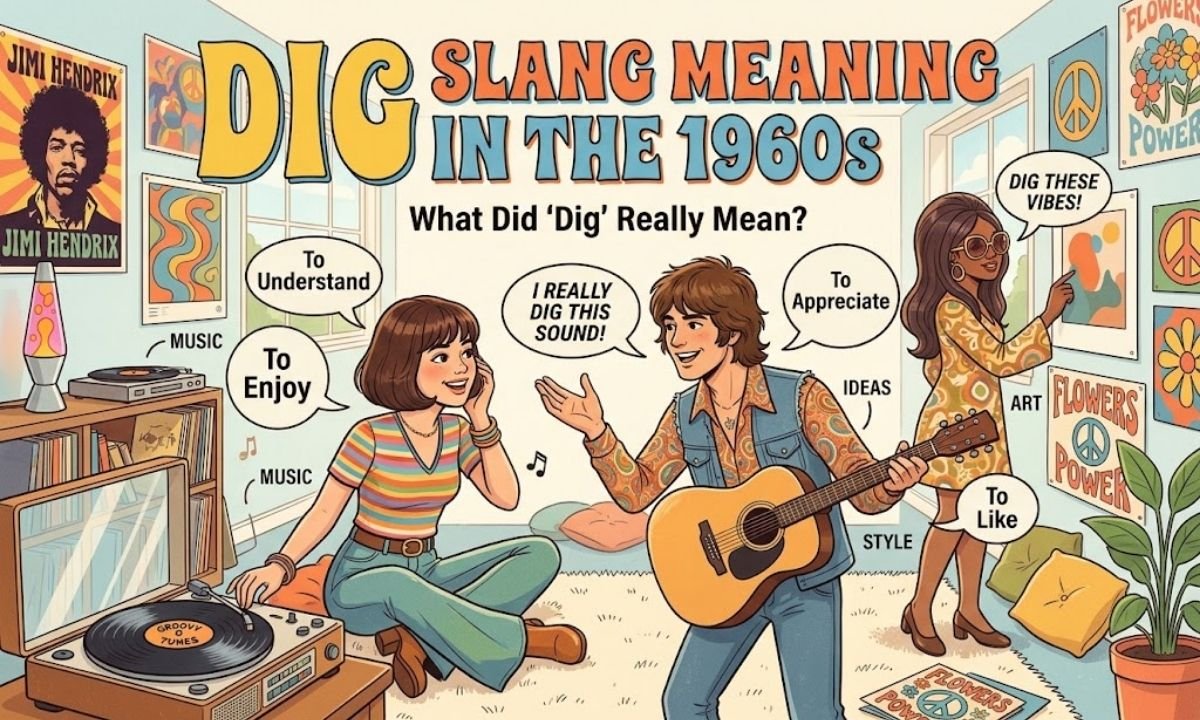

Anyone flipping through old interviews, movies, or song lyrics from the 1960s has likely come across someone saying they dig a song, an idea, or a person. The word shows up everywhere in that era, yet its meaning is not always obvious to modern ears.
In simple terms, dig was slang for liking, understanding, or appreciating something. Saying I dig it usually meant I like it or I get it, and the expression carried a relaxed, approving tone that fit perfectly with the hip and counterculture speech of the decade.
What Did Dig Mean in the 1960s?
Dig worked as a flexible verb that stretched across several closely related ideas. Depending on the sentence, it could signal enthusiasm, comprehension, or simple agreement with what someone said.
The Simple Meaning of Dig in 1960s Slang
At its core, dig meant to appreciate or connect with something on a genuine level, whether that was music, art, a person, or an idea.
Did Dig Mean Like or Understand?
Both. Dig covered liking something and understanding something, and the exact sense usually depended on the surrounding conversation.
Why the Meaning Could Change With Context
A phrase like I dig that painting leaned toward appreciation, while Do you dig what I am saying leaned toward comprehension, showing how flexible the word really was.
What Does Dig It Mean in 1960s Slang?
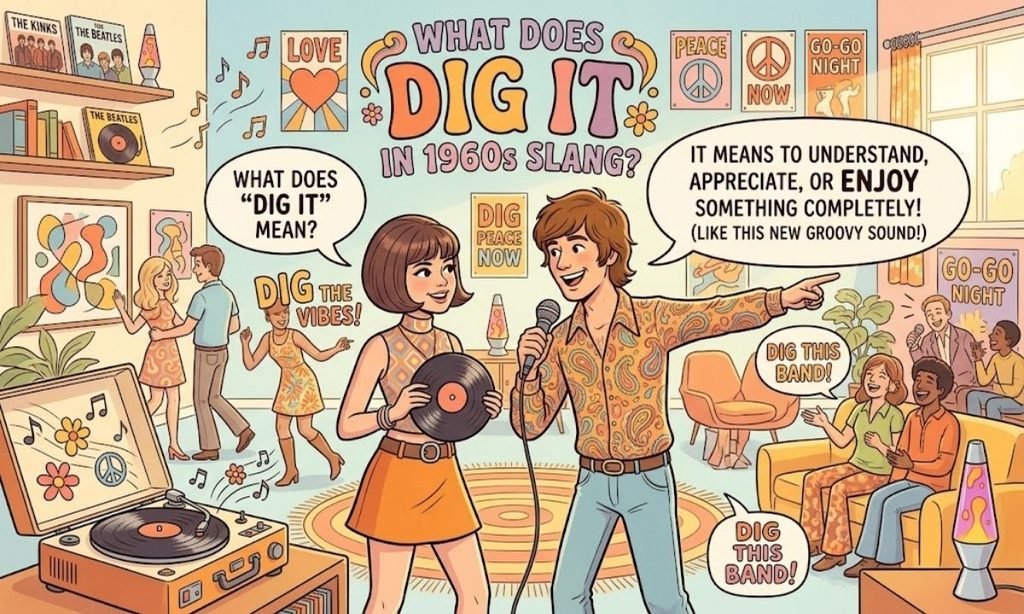
Dig functioned almost like its own phrase, often used to express agreement, enthusiasm, or acknowledgment rather than a literal action.
I Dig It Meaning
This phrase generally translates to I like it or I am really into this, often said about music, style, or a new idea.
Can You Dig It Meaning
This question asked whether the listener understood or agreed with what was being said, similar to asking do you get it or are you with me.
You Dig Meaning in Conversation
Added at the end of a sentence, you dig to check whether the other person followed along, functioning much like you know or right.
I Dig That Meaning
This phrase showed approval or agreement, often used casually in response to a suggestion or statement someone else made.
Why Did People Say Dig in the 1960s?
The word did not appear out of nowhere during the decade. It became widely popular because it fit naturally into several overlapping cultural movements that valued casual, expressive language.
Dig and the Beat Generation
Beat writers and poets favored loose, rhythmic language, and dig fit their style perfectly as a way to describe genuine appreciation or insight.
Jazz Culture and Hip Language
Jazz musicians and fans used dig regularly to describe grasping a musical idea or truly feeling a performance, reinforcing its connection to hip culture.
The Rise of Counterculture Slang
As counterculture movements grew through the decade, dig became one of many words that signaled belonging to a shared, informal way of speaking.
How Young Americans Adopted the Expression
Young people picked up the term from music, film, and social circles, spreading it well beyond its original communities into everyday teenage and college speech.
Where Did the Slang Dig Come From?
It is inaccurate to say dig was invented in the 1960s. The slang sense existed decades earlier and simply became closely tied to the decade through widespread pop culture use.
The Earlier History of Dig
Language references trace the slang usage of dig back to the 1930s and 1940s, well before it became a defining word of the 1960s.
Dig in African American English
The expression has roots in African American English, where it carried meanings tied to noticing, understanding, and appreciating before spreading into broader American slang.
How Dig Entered Mainstream American Speech
Through jazz clubs, radio, and later film and television, the term moved from specific communities into mainstream youth culture over time.
Why Its Exact Origin Is Debated
Because slang spreads informally through speech rather than written records, pinpointing an exact origin point remains difficult, and language historians continue to discuss its early development.
Related Post: TD Meaning in Text: What Does TD Stand For and How to Use It Correctly
How Dig Was Used in 1960s Conversations
- I dig your style, meaning I really like how you dress or present yourself.
- Do you dig this music, asking whether someone enjoys or connects with a song.
- I dig what you mean, confirming understanding of someone’s point.
- You dig me, checking whether the listener is following along.
- I don’t dig it, expressing dislike or disagreement with something.
Dig Meaning: Like vs Understand vs Appreciate
| Expression | Likely Meaning |
| I dig this song | I like or appreciate this song |
| Do you dig what I mean | Do you understand me |
| I dig your idea | I like or approve of your idea |
| You dig | Do you understand or agree |
| I really dig this place | I genuinely appreciate this place |
When Dig Means Like
Dig leaned toward like when describing music, fashion, food, or anything someone personally enjoyed.
When Dig Means Understand
The word shifted toward understand in questions checking whether someone followed an explanation or point.
When Dig Means Appreciate
In more thoughtful contexts, dig described a deeper appreciation, such as connecting with an idea, artwork, or philosophy.
How Context Reveals the Meaning
Listening to the sentence structure and topic usually made the intended meaning clear, even though the word itself stayed the same.
Dig vs Other Popular 1960s Slang Words
| Slang Word | General Meaning |
| Dig | To like, understand, or appreciate |
| Groovy | Excellent or fashionable |
| Far out | Impressive or unconventional |
| Cool | Approved of or acceptable |
| Square | Boring or overly conventional |
Dig vs Groovy
While groovy described something excellent or stylish, dig focused more on personal connection or understanding rather than general approval.
Dig vs Far Out
Far out expressed amazement or surprise, whereas dig expressed a calmer sense of liking or grasping something.
Dig vs Cool
Cool signaled general approval, while dig often implied a more personal, emotional response to something.
Dig vs Hip
Hip described a person or trend as fashionable and aware, while dig described the act of appreciating or understanding that trend.
Dig vs Square
Square stood as the opposite of hip culture entirely, describing someone out of touch, while dig described active engagement with culture.
Regional and Generational Spread of Dig Slang
The word did not stay confined to one city or scene. It traveled from jazz clubs and Beat gatherings into college campuses, then into mainstream television and film scripts, which exposed it to a much wider national audience throughout the decade.
Dig in Music, Film, and Pop Culture References
Song lyrics, movie dialogue, and interviews from the era frequently used dig to sound authentic and current. Its presence in popular media helped cement it as a recognizable marker of 1960s speech long after the decade ended.
Related Post: Flamingo Meaning Slang: What Does “Flamingo” Mean in Texting?
Was Dig Really Popular in the 1960s?
Dig in Beat and Hip Culture
Within Beat and hip circles, dig was a core piece of vocabulary used constantly in everyday conversation.
Dig in Music and Popular Culture
Musicians, especially in jazz and later rock, used the term frequently, helping it spread through concerts, interviews, and lyrics.
Why Dig Became Associated With the 60s
Even though older, the word reached peak visibility during the 1960s thanks to its heavy use across youth and counterculture media.
Is Dig Still Used Today?
Occasionally. The word survives today but often carries a nostalgic or retro flavor rather than sounding like natural modern speech.
1960s Dig Slang Examples With Modern English
| 1960s Phrase | Modern Equivalent |
| I dig it | I like it |
| Can you dig it | Do you understand |
| I dig your idea | I like your idea |
| You dig | You know what I mean |
| I don’t dig that | I don’t like that |
Is Dig Still Used as Slang Today?
How Americans Use Dig Now
Some speakers still use dig casually, especially when referencing older music or intentionally invoking a retro tone.
Why It Sounds Old Fashioned
Because newer slang has replaced it in everyday speech, dig now reads as dated rather than current.
When Dig Sounds Natural Today
It fits naturally in music discussions, nostalgic conversations, or intentional throwback styling.
When to Avoid 1960s Slang
In formal writing or professional settings, dig should generally be replaced with clearer modern language like understanding or appreciation.
Frequently Asked Questions
What Did Dig Mean in the 1960s?
Dig meant to like, understand, or appreciate something, depending on the context of the sentence.
What Does I Dig It Mean?
It means I like it or I am genuinely enjoying this.
What Does Can You Dig It Mean?
It asks whether someone understands or agrees with what was just said.
Does Dig Mean Like or Understand?
It can mean both, since the word covered liking, understanding, and appreciating in different situations.
Where Did the Slang Word Dig Come From?
It traces back to the 1930s and 1940s, with roots in African American English before spreading nationally.
Was Dig 1960s Hippie Slang?
It was used within hippie and counterculture circles, though it originated earlier and spanned Beat and jazz culture as well.
Is Dig Still Used Today?
Occasionally, mostly in nostalgic or music related contexts rather than everyday modern speech.
Conclusion
Dig stands as one of the more versatile slang words to come out of twentieth century American culture, capable of expressing liking, understanding, and appreciation all at once.
While its roots stretch back before the 1960s, the decade cemented its place in pop culture through jazz, Beat writing, and counterculture speech. Today it survives mostly as a nostalgic nod to that era, but understanding its meaning helps make sense of countless songs, films, and conversations from the time.
