

Food and language have always grown together in American culture, and nowhere is that clearer than in the slang people use to describe what they eat. From old-school words like grub and chow to newer TikTok-born phrases like bussin and girl dinner, food slang captures mood, humor, and identity in just a word or two.
This guide breaks down the most common American food slang terms, where they came from, and how to use them naturally in conversation, texting, or on social media without sounding forced or outdated.
What Is Food Slang and Why Do Americans Use It?
Food slang is informal, casual language used to describe meals, snacks, cravings, or the experience of eating. Instead of saying “this meal is delicious,” someone might say “this slaps.” These expressions are shorter, punchier, and often carry emotional tone that formal vocabulary lacks.
Americans lean on food slang because it builds connection. Shared slang signals that speakers belong to the same generation, community, or online space. It also makes everyday communication faster — a single word like fire can replace an entire sentence of praise.
Classic American Food Slang Words
These terms have been part of everyday speech for decades and are still widely understood across generations.
- Grub food in general, often used casually (“Let’s grab some grub”)
- Chow another word for food, especially a meal (“Chow time”)
- Eats casual shorthand for food or a meal
- Nosh to snack or eat lightly, borrowed from Yiddish
- Munchies a strong craving for snacks, often used after physical activity or late at night
- Bites small portions of food, or finger food at a gathering
- Feed used loosely to mean a meal, as in “time to feed”
Gen Z Slang for Delicious Food
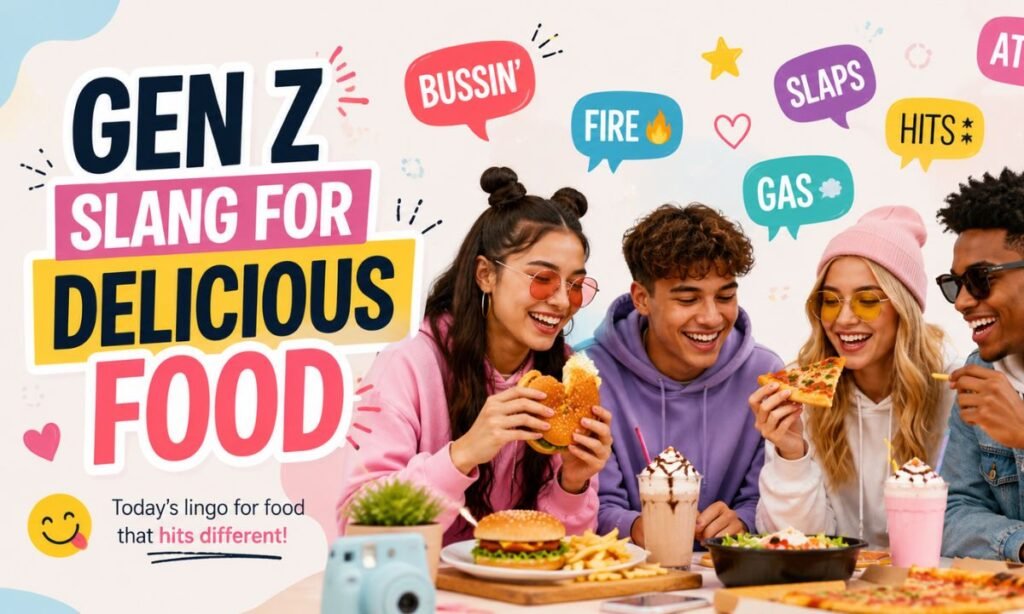
Gen Z has reshaped how young Americans talk about good food online and in person. These words spread quickly through short-form video platforms and group chats.
Bussin
Bussin describes food that tastes exceptionally good. It’s one of the most widely recognized Gen Z food terms and works well in casual writing or captions.
Fire
Fire means something is excellent or impressive, and it applies to food just as easily as it applies to music or fashion.
Gas
Similar to fire, gas is used to hype up food that exceeded expectations, often in a more intense or excited tone.
Slaps
When food slaps, it means the flavor hits hard in a satisfying way commonly used for comfort food or bold flavors.
Hits
Close in meaning to slaps, hits describes food that delivers strong satisfaction, especially something warm or filling.
Ate
Originally used to praise performances, ate has crossed into food slang to mean something was done exceptionally well, including a meal or dish.
Mid
Mid is the opposite of impressive it describes food that is average, forgettable, or simply okay.
Food Slang Cheat Sheet
| Term | Meaning | Tone |
| Bussin | Extremely tasty | Enthusiastic |
| Fire | Excellent, impressive | Positive |
| Slaps | Satisfying flavor | Casual, warm |
| Mid | Average or disappointing | Neutral to negative |
| Grub | Food in general | Casual |
| Munchies | Craving for snacks | Playful |
| Girl Dinner | A meal made of small snacks or leftovers | Lighthearted |
What Does Girl Dinner Mean?
Girl dinner refers to a meal made up of small, mismatched snacks or leftovers rather than a traditional plated dish — think cheese, crackers, fruit, and a pickle eaten together as “dinner.” The phrase became popular because it reflects real, unfiltered eating habits rather than curated food content, and many people found it relatable and funny.
Modern TikTok and FoodTok Slang
FoodTok has introduced its own vocabulary around how people discover, review, and share meals online.
- FoodTok the corner of TikTok focused on cooking, reviews, and food trends
- Viral food a dish or recipe that spreads quickly across social platforms
- Taste test short videos reviewing a food item on camera
- Food ASMR content focused on the sounds of eating or cooking
- TikTok made me try it a phrase used when someone buys or cooks something after seeing it go viral
Food Slang That Doesn’t Literally Mean Food
Some food-related words have taken on meanings that have nothing to do with eating.
| Term | Slang Meaning |
| Snack | An attractive person |
| Tea | Gossip or interesting information |
| Bread | Money |
| Sauce | Style, confidence, or flair |
| Spicy | Bold, exciting, or slightly controversial |
American Food Slang by Generation
- Gen Z bussin, fire, mid, slaps, girl dinner
- Millennials foodie, snack, basic, extra
- Older generations grub, chow, nosh, munchies
Some terms fade quickly once they lose novelty, while classic words like grub and chow have stayed in use for decades because they’re simple and generation-neutral.
American vs. British Food Slang
- Chips means fries in British English, while chips means crisps in American English
- Bangers refers to sausages in British slang
- Knackered is unrelated to food but often appears alongside British food content, meaning exhausted
- Peckish means slightly hungry, a term rarely used in American speech
How to Use Food Slang Naturally
Food slang works best in casual settings like texting, social captions, or conversations with friends. Using words like bussin or slaps in a professional email or formal review can come across as out of place. In more formal writing, safer alternatives include delicious, flavorful, or well-balanced instead of fire or gas.
Is Food Slang Still Popular in 2026?
Not every viral food term becomes lasting slang. Some phrases fade within a season, while others, like bussin and mid, have stuck around because they’re versatile and easy to use outside of food contexts too. It’s worth separating genuine slang from short-lived viral trends when tracking what’s actually still common.
Frequently Asked Questions
What is the most common slang for food?
Grub and eats are among the most widely recognized casual terms for food across all age groups in the U.S.
What is Gen Z slang for good food?
Bussin, fire, and slaps are the most common Gen Z terms used to describe delicious food.
What does bussin mean?
Bussin means that food tastes exceptionally good, often used to hype up a meal or snack.
What does food is gas mean?
Calling food gas means it’s excellent or impressive, similar in meaning to fire.
What does slaps mean in food slang?
Slaps describes food with a strong, satisfying flavor that hits just right.
What does girl dinner mean?
Girl dinner refers to an informal meal made of small snacks or leftovers instead of a full cooked dish.
Is food slang appropriate in formal writing?
No, food slang is best kept for casual conversations, texting, and social media rather than formal or professional writing.
Conclusion
American food slang blends decades-old classics with fast-moving internet expressions, and both styles are useful depending on the setting. Grub and chow remain safe, generation-neutral choices, while bussin, fire, and girl dinner capture the more playful tone of current online culture. The key is matching the slang to the audience casual with friends, plain and clear in formal writing.

3 thoughts on “American Food Slang in 2026: The Complete Guide to Bussin, Fire, and Girl Dinner”