
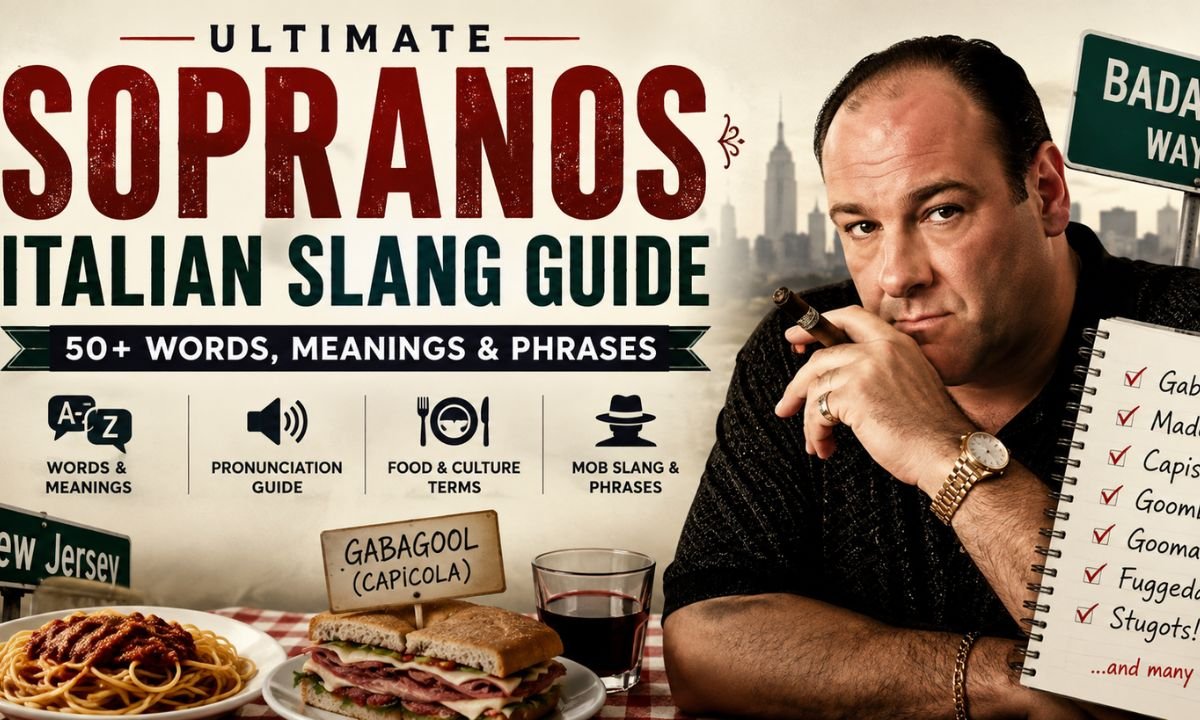

The Sopranos didn’t just give viewers one of television’s greatest crime dramas, it also introduced millions of fans to a colorful mix of Italian American dialect, Jersey slang, and underworld terminology.
Words like gabagool and madone stuck in pop culture long after the final episode aired, even though most of them are not standard modern Italian at all.
This guide breaks down the real meanings, origins, and pronunciations behind the show’s most memorable expressions, separating genuine Neapolitan and Sicilian dialect roots from pure mafia code language, so you can finally understand what Tony and the crew were actually saying.
What People Get Wrong About Sopranos Italian Slang
Most of the vocabulary associated with the show is not textbook Italian. It is a blend of southern Italian regional dialect, generations of pronunciation drift among Italian American immigrant families, and slang invented specifically for organized crime.
Someone who studied Italian in school would likely not recognize gabagool as capicola on sound alone, because the words passed through Neapolitan and Sicilian dialects before landing in New Jersey kitchens and living rooms.
- Regional dialect (mostly Neapolitan and Sicilian) shaped the pronunciation
- Immigrant communities dropped final vowels and softened hard consonants over decades
- Mob terminology was layered on top for secrecy and identity
- Writers exaggerated some phrases slightly for television effect
Sopranos Slang at a Glance
Here is a quick reference table before diving into detailed meanings, pronunciation, and modern usage for each term.
| Word | Meaning | Category | Tone |
| Gabagool | Capicola cured meat | Food | Playful |
| Madone | Oh my God, shock or frustration | Expression | Dramatic |
| Capisce | Understand? | Expression | Assertive |
| Goombah | Close friend or associate | Slang | Casual |
| Goomah | Mistress | Slang | Adult |
| Stunad | Fool or idiot | Insult | Informal |
| Agita | Anxiety or heartburn | Slang | Casual |
| Fuggedaboutit | Forget about it, drop the subject | Phrase | Dismissive |
Related Post: Slang Word for Cool: 50+ Trendy Ways to Say It in 2026
The Most Recognizable Sopranos Words and Their Real Meanings
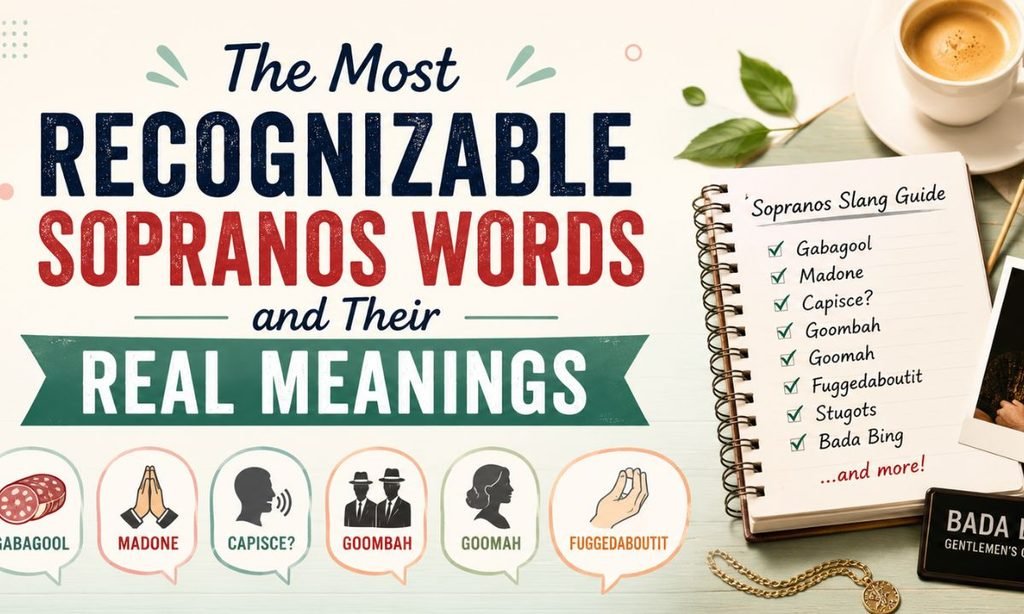
Gabagool. This is the show’s most famous food word, and it comes from capicola, a spicy cured pork cold cut. Southern Italian dialects, especially Neapolitan speech, tend to drop the final vowel of a word and shift a hard “c” sound toward a “g” sound.
Over generations, capicola became capacol, then shifted further into the version fans now recognize. It is pronounced roughly gab-uh-gool, though purists note the more accurate dialect version ends closer to gab-uh-gol.
Madone. Short for Madonna, this exclamation is used the way English speakers might say oh my God. Characters use it to express shock, exasperation, or disbelief, and it carries real roots in southern Italian religious expressions rather than being an invented TV phrase.
Capisce. This one is closer to standard Italian, derived from the verb capire, meaning to understand. On the show it is used almost like a verbal exclamation point at the end of an order or warning, often spelled casually as capeesh in fan writing.
Goombah and Goomah. These two are frequently confused because they sound alike but mean very different things. Goombah describes a close friend, associate, or fellow paesano, tracing back to the Italian word compare. Goomah, by contrast, refers to a mistress or side companion, and likely comes from the same root word filtered through a different regional pronunciation.
Stunad and Stugots. Stunad describes someone acting foolish or dazed, rooted in the Italian word stonato, meaning out of tune or confused. Stugots is a rougher, more vulgar exclamation used for emphasis or frustration, closer to crude Neapolitan slang than anything found in a standard Italian phrasebook.
Agita. Borrowed from the Italian word for agitation, this term covers both physical heartburn and general nervous stress, and it is one of the few words on this list that non-Italian Americans have fully absorbed into everyday English.
Fuggedaboutit. Technically more New York and New Jersey street slang than Italian, this phrase means forget it, drop it, or don’t even worry about it. It became one of the most quoted lines associated with mob movies and shows well before The Sopranos, and the series simply kept the tradition alive.
Mob Terminology That Has Nothing to Do With the Italian Language
Not every recognizable phrase from the show is Italian at all. A separate layer of vocabulary belongs strictly to organized crime culture, and understanding the difference helps explain why some words feel more like code than language.
- Made man: a fully initiated member of a crime family
- Wiseguy: a general term for an established mob member
- Capo: a captain who supervises a crew
- Consigliere: a trusted advisor to a boss
- Sit-down: a formal meeting to resolve a dispute
- This thing of ours: a coded reference to the organization itself
- Our friend: a cautious way of referring to a connected associate without naming them
These phrases exist for secrecy and identity rather than translation, which is why they will not appear in any Italian dictionary no matter how closely you search.
Italian American Food Slang From the Show
Food is central to nearly every Sopranos scene, and the pronunciation shifts here follow a consistent pattern rooted in southern Italian dialects.
| Sopranos-Style Term | Standard Italian | English Meaning |
| Gabagool | Capicola | Cured pork cold cut |
| Mutzadell | Mozzarella | Fresh Italian cheese |
| Manigot | Manicotti | Stuffed pasta tubes |
| Fazool | Fagioli | Beans, as in pasta e fagioli |
| Rigott | Ricotta | Soft Italian cheese |
| Supersad | Soppressata | Dry cured salami |
This pattern of shortening words and dropping final vowels is not random. It reflects real linguistic habits carried over from southern Italian immigrant communities, particularly in and around New Jersey and New York, and passed down informally through family kitchens rather than formal language lessons.
Related Post: American Food Slang in 2026: The Complete Guide to Bussin, Fire, and Girl Dinner
Why the Pronunciation Sounds So Different From Modern Italian
Most Italian Americans in the New York and New Jersey area trace their roots back to Naples, Sicily, and other southern regions, not to the Tuscan dialect that modern standard Italian is based on.
Southern dialects historically dropped final vowels and softened certain consonants, and when families immigrated in the late 1800s and early 1900s, that pronunciation traveled with them and evolved independently for over a century, disconnected from how Italy itself continued to speak.
Can You Actually Use This Slang in Real Conversation
Some of these words work fine in casual, friendly settings, especially among people who grew up around Italian American culture. Others carry outdated, crude, or even offensive undertones and are best left as television dialogue rather than everyday vocabulary.
- Generally safe and fun: gabagool, madone, agita, fuggedaboutit
- Use with caution around strangers: goomah, stunad, stugots
- Best avoided entirely: any slur-adjacent terms sometimes referenced in mob media, since context and intent matter enormously and casual repetition can easily read as disrespectful
A good rule of thumb is that food words travel well in any setting, while insults and coded mob language do not translate outside of the show’s fictional world.
How Gabagool and Friends Spread Beyond The Sopranos
Sopranos slang did not stay contained to one show. Later series and sketches referenced the same pronunciation for comedic effect, and the terms spread further through internet memes, cooking videos, and social media clips long after the original series ended in 2007.
That afterlife is part of why gabagool remains one of the most searched words tied to any American crime drama, even among viewers who have never watched a single episode.
Common Mistakes Fans Make With This Vocabulary
- Assuming every term is standard Italian rather than regional dialect or invented mob code
- Mixing up goombah and goomah, which have completely different meanings
- Overusing crude terms in professional or mixed company settings
- Treating television exaggeration as an accurate language lesson
A Simple Glossary for New Fans Just Starting the Show
If you are new to the series, keep this shortlist handy for the first few episodes before the vocabulary becomes second nature.
- Gabagool: cured pork cold cut
- Madone: an exclamation of shock or frustration
- Capisce: do you understand
- Goombah: a close friend or associate
- Fuggedaboutit: forget about it, no need to discuss further
Frequently Asked Questions
What does gabagool actually mean?
Gabagool is the Italian American dialect pronunciation of capicola, a spicy cured pork cold cut popular in Italian delis.
Is the slang from the show real Italian?
Some words trace to genuine southern Italian dialect, while others are invented with no direct Italian translation.
What is the difference between goombah and goomah?
Goombah means a close friend or associate, while goomah refers to a mistress, so the two are easy to mix up but very different.
What does madone mean in context?
Madone is a shortened form of Madonna, used as an exclamation similar to saying oh my God.
Why do characters drop the final letters of Italian words?
Southern Italian dialects, especially Neapolitan speech, traditionally drop final vowels, and that habit carried over through generations of immigrant families.
Is it okay to use this slang casually today?
Food and greeting terms are generally fine in casual settings, but insults and coded mob phrases are better left as fictional dialogue.
What does fuggedaboutit really mean?
It means forget about it or drop the subject, and it predates the show as general New York and New Jersey street slang.
Conclusion
Sopranos slang is really a layered mix of southern Italian dialect, generations of Italian American pronunciation shifts, food vocabulary, and invented mob terminology, not a single unified language.
Understanding which category each word falls into makes the show’s dialogue richer and helps fans use these expressions accurately, respectfully, and with a little more confidence than just repeating what sounded good on screen.

2 thoughts on “Sopranos Italian Slang Guide: Words, Meanings, and Mob Phrases Explained”