


You get a message that ends with “iyw” and wonder if it is a typo, a code, or a name.It is none of those, and it is easy to understand once you see it in a sentence.
IYW stands for “if you want.” People add it to invitations, offers, and suggestions to show that the choice is yours. It sounds relaxed, friendly, and pressure-free.
This guide explains the meaning, origin, real chat examples, similar phrases, and replies. You will also learn where IYW fits, where it does not, and what to do when you are unsure.
What Does IYW Mean? A Quick Explanation
IYW means “if you want.” It is a casual texting abbreviation used to offer an option without pushing the other person to accept.
IYW Meaning in Simple Terms
Think of IYW as a polite “no pressure.” The sender is saying, “This is available if you like, and it is fine if you don’t.”
- I = If
- Y = You
- W = Want
Common Examples of IYW in Messages
“We’re grabbing food later, come along iyw.”
“I can send the notes tonight iyw.”
“You can borrow my charger iyw 😊”
In each case, the sender offers something and leaves the decision to you.
Notice where IYW sits. It usually comes at the end of the sentence, after the offer. That placement makes the message feel like a gentle add-on instead of an order. You may also see it before a request, such as “iyw, send me the link,” but the end position is far more common.
The Origin and Background of IYW
IYW has no known inventor. It comes from the spoken phrase “if you want,” which people use every day to make soft offers. Texters turned the three key words into initials, just as they did with “idk” and “btw.”
How IYW Became Popular in Online Conversations
Fast chats on WhatsApp, Instagram, TikTok, and Snapchat reward short replies. IYW saves typing and keeps the tone light, so it spread through friend groups and comment sections. It is still a niche abbreviation, so many people spell it out at first. 💬
Three habits helped it spread:
- Speed: a three-letter shortcut beats typing four words.
- Soft tone: people want to invite others without sounding bossy.
- Copycat slang: once friends see it, they start using it too.
The result is a small but steady rise in everyday chats, especially among teens and young adults.
Real-Life Examples of IYW in Conversations
These examples are original and show how the tone changes by platform.
IYW in WhatsApp Chats
Hamza: heading to the market at 5, you can join iyw
Ayesha: yes please, I need fruit anyway 🍎
IYW in Instagram Direct Messages
Nina: I have extra tickets for Saturday, iyw 🎶
Omar: wait, really? count me in!
IYW in TikTok Comments
Creator: drop your questions below, I’ll answer a few iyw
Viewer: how do you edit so fast? 😭
IYW in Snapchat Chats
Sam: we’re on a call, hop in iyw
Jules: give me five minutes!
IYW in Text Message Conversations
Dad: I can pick you up after class iyw
Lena: that would be great, thanks!
The Emotional and Social Meaning of IYW
Small words shape how a message feels. IYW sets a gentle tone and signals respect.
1. Showing Respect for Personal Choices
IYW tells the other person they can say no without any awkwardness. This is helpful when plans, favors, or invites could feel like obligations.
2. Expressing Casual Friendliness
The abbreviation sounds warm and relaxed. It feels like a friend leaning back and saying, “the door is open.”
3. Giving Others Freedom Without Pressure
By leaving the decision open, IYW lowers the pressure to reply fast or explain a refusal. Quiet respect like this builds trust in a chat. 🙂
Compare “join the study group” with “join the study group iyw.” The first sounds like an instruction. The second sounds like a friendly offer. That small difference can change how willing someone feels to say yes.
How IYW Is Used in Different Contexts
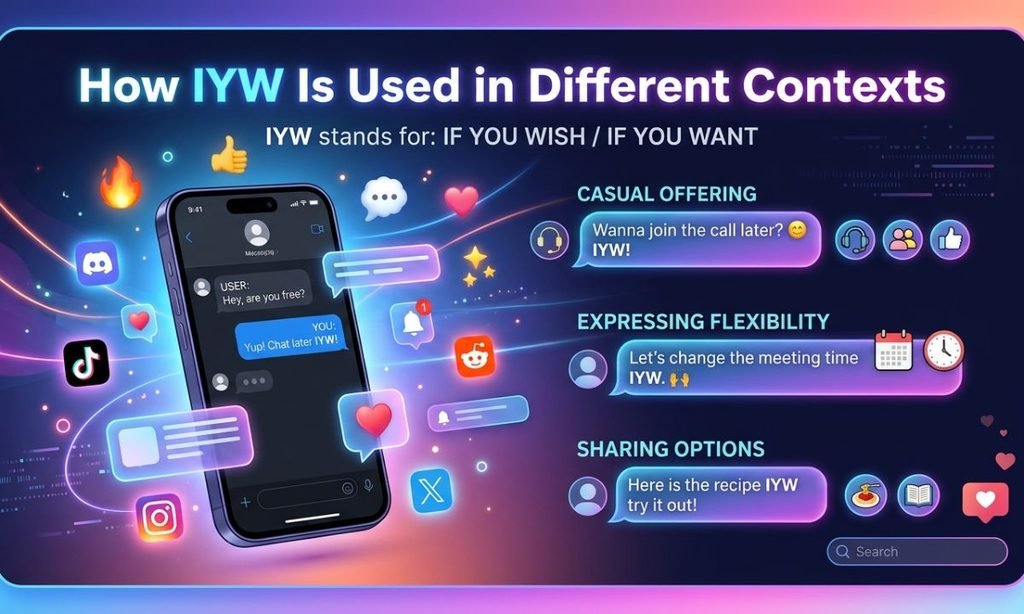
IYW on Social Media Platforms
Creators and friends use IYW in captions, replies, and DMs to invite people without sounding pushy. Example: “join the live iyw.”
Using IYW With Friends and in Relationships
With friends and partners, IYW offers choices for plans, food, and favors. Example: “we can watch a movie tonight iyw.” It shows care without taking control.
IYW in Professional and Workplace Communication
IYW is too casual for most business messages. Use “if you’d like” or “please let me know if you’d prefer.” In a relaxed team chat among close colleagues, it can work, but read the culture first.
Understanding the Difference Between Casual and Serious Tones
IYW suits light topics: plans, snacks, small favors. For serious matters like money, health, or deadlines, write the full sentence so nothing sounds careless.
Here is a quick contrast. “We can grab ice cream iyw 🍦” is light and fun. “You can submit the tax form iyw” sounds careless, because a deadline is not really optional. When the stakes are high, say exactly what you mean.
Common Misunderstandings About IYW
1. Mistaking IYW for a Name or Secret Code
It is not a name, brand, or hidden message. It is plain shorthand for “if you want.”
2. Misinterpreting IYW as Sarcasm
IYW is usually sincere. Sarcasm appears from context, like an eye-roll emoji or a cold reply. Without those clues, take it at face value.
3. Using IYW in Formal Communication
Emails, applications, and client messages call for full wording. “If you’d like” is clearer and safer.
A simple swap works well. Instead of “attend the call iyw,” write “please join the call if you’re available.” It keeps the polite spirit of IYW and fits professional standards.
IYW Compared With Similar Expressions

| Expression | Meaning | Tone |
| IYW | If you want | Casual, optional |
| IYKWIM | If you know what I mean | Hints at hidden meaning |
| IYKYK | If you know, you know | Inside joke |
| IDC | I don’t care | Indifferent |
| IMO | In my opinion | Shares a view |
| YW | You’re welcome | Polite reply |
Key Differences and When to Use Each Expression
Use IYW when you are offering a choice. Use IYKWIM or IYKYK when you hint at shared knowledge. Use IDC carefully, since it can sound cold. Use YW only after someone thanks you.
A quick example: “lmk iyw” (let me know if you want) combines two abbreviations and works well in planning chats. Be careful with stacking too many abbreviations in one line, because it can make a message hard to read.
Common Variations and Alternatives to IYW
1. “If U Want” — A Casual Alternative
The spelled-out, slangy form. Example: “come over if u want.”
2. “Up to You” — Leaving the Decision to Someone Else
Shows trust. Example: “Pizza or tacos? Up to you.”
3. “Your Call” — Letting Someone Make the Choice
Short and direct. Example: “We can start now or later, your call.”
4. “No Pressure” — Making an Offer Feel Optional
Softens an invite. Example: “We’re meeting at 8, no pressure.”
5. “Totally Optional” — Emphasizing Freedom of Choice
Great for events and tasks. Example: “The workshop is totally optional.”
6. “Only If You Want” — Showing Consideration
Stresses that you do not expect a yes. Example: “Join us only if you want.”
7. “Feel Free” — Offering Permission or Encouragement
Welcoming and polite. Example: “Feel free to borrow my notes.”
8. “If You’d Like” — Making a Polite Suggestion
The best fit for work. Example: “I can share the file if you’d like.”
9. “Whenever You Want” — Giving Someone Flexibility
Opens the timing. Example: “Call me whenever you want.”
10. “You Can If You Want” — Leaving the Choice Open
A relaxed permission line. Example: “You can bring a friend if you want.”
How to Respond When Someone Uses IYW
Match your reply to the offer. A clear yes, no, or maybe is always welcome.
Casual Replies to IYW
- “Yes, I’m in!”
- “Sounds good, thanks.”
- “Maybe later, I’ll let you know.”
Funny and Playful Responses to IYW
- “I want, I want! 😂”
- “Bold of you to assume I’ll say no to snacks.”
- “Let me consult my calendar and my appetite.”
Mature and Confident Ways to Reply to IYW
- “Thank you, I’d like that.”
- “I appreciate it, but I’ll pass this time.”
Respectful Responses That Maintain Personal Boundaries
You never have to accept. Try: “Thanks for thinking of me, but I’ll sit this one out.” A kind and clear no keeps the chat friendly. 👍
Other polite ways to decline include:
- “Not this time, but thanks for asking.”
- “I’m busy tonight, maybe next week?”
- “I’ll pass, have fun!”
Each one is clear, kind, and leaves the door open for future plans.
How IYW Usage Varies Across Cultures and Regions
IYW in Western Online Conversations
In English-speaking communities, IYW is understood mostly by younger, heavy texters. Many people still type “if you want” in full.
IYW in Asian Digital Communication
In multilingual chats, English shorthand often appears beside local words. IYW keeps its meaning, but not every reader knows it, so spelling it out helps.
IYW in Middle Eastern Online Conversations
Young English-speaking users may use it with friends on Instagram and Snapchat. Polite offers matter in many cultures there, so IYW can feel considerate.
IYW in Global Internet Culture
Slang travels fast through memes and short videos, but IYW is not universal. When chatting with newer English speakers, use the full phrase. 🌍
Tone also changes with language habits. Some cultures value direct requests, while others prefer soft, indirect offers, so IYW may feel more natural in some chats than others.
Other Meanings
IYW has no widely documented meaning besides “if you want.” Still, a few lookalikes can cause confusion:
- IWY: a different abbreviation, usually read as “I want you.” It can be a typo or a flipped version of IYW.
- IYKWIM / IYKYK: other “IYK” phrases that look similar but mean something else.
- Community-specific uses: some groups invent private meanings. If the context does not fit “if you want,” ask what the sender meant.
Conclusion
IYW means “if you want” and gives people a friendly way to offer choices. It keeps chats light, respectful, and pressure-free.
Use it with friends and in casual chats, skip it in formal messages, and reply with a clear yes, no, or maybe. When you are unsure, spelling it out never hurts.
Frequently Asked Questions
What Does IYW Mean in Text Messages?
IYW means “if you want.” It offers an option without pressure.
Is IYW Considered Rude or Disrespectful?
No. It is polite and gives the other person freedom to choose.
Is IYW an Informal or Formal Expression?
It is informal. Use it in casual chats, not formal writing.
How Is IYW Used on Social Media?
People add it to invites, captions, and replies, like “join the live iyw.”
Does IYW Mean the Same Thing as “Up to You”?
It is close. IYW offers an option, while “up to you” hands over the final decision.
Is It Appropriate to Use IYW in Work Emails?
Usually not. Write “if you’d like” for a more professional tone.
Why Do People Abbreviate Common Phrases in Text Messages?
Abbreviations save time and match the quick pace of chat. They also give messages a relaxed tone.
