
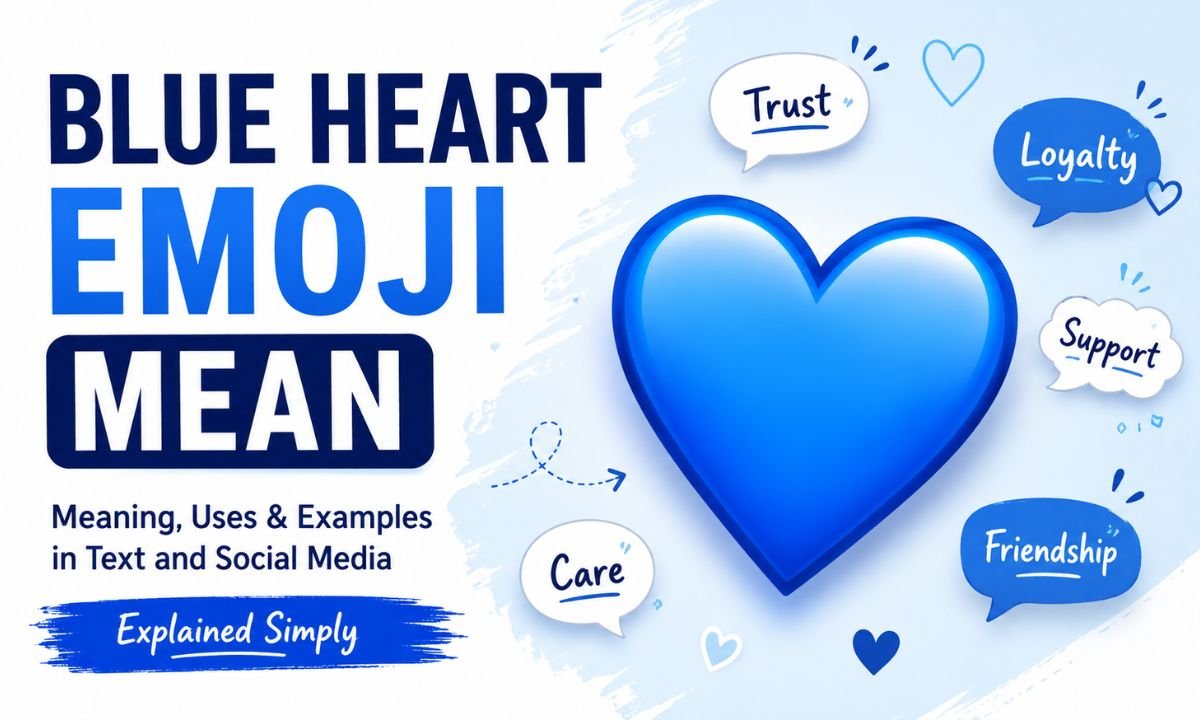

The blue heart emoji shows up everywhere, from casual texts to Instagram comments to support threads for a friend going through a rough week. Because it looks softer than the classic red heart, a lot of people pause before sending it and wonder what message it actually sends.
In short, the blue heart usually signals trust, loyalty, calm affection, or genuine support rather than romantic passion. That said, the real meaning always shifts depending on who sent it, the platform, and the conversation around it.
What Does the Blue Heart Emoji Really Mean
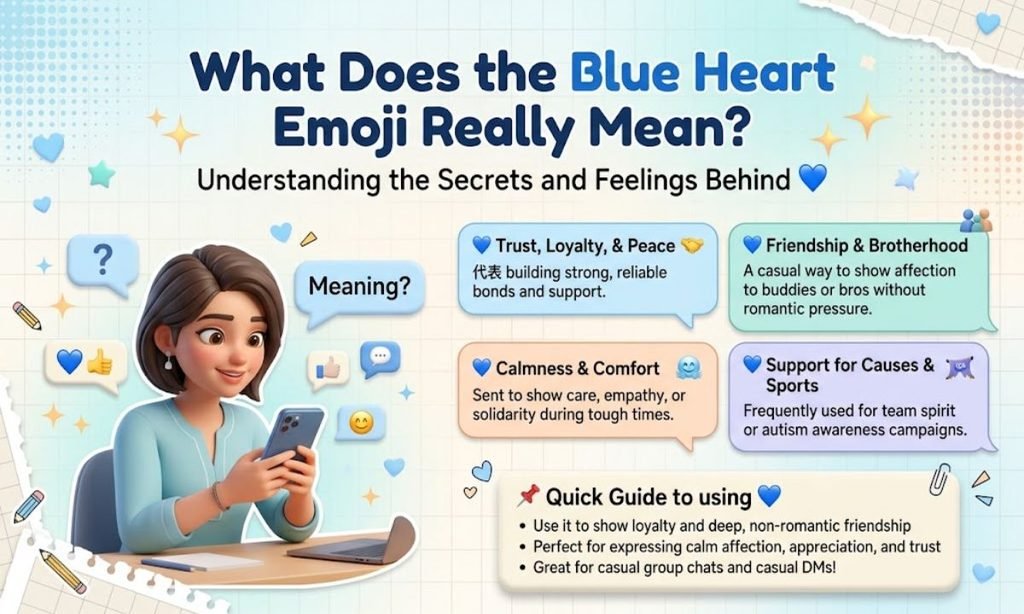
At its core, this symbol was built to represent a cooler, steadier form of care compared to the red heart. It was approved by the Unicode Consortium as part of Unicode 6.0 in 2010 and became broadly available on major platforms soon after, which is why it now feels like a natural, everyday emoji rather than a niche one.
Across texting, social apps, and casual chats, the blue heart most often points to one of these feelings:
- Trust and reliability
- Loyalty between friends or family
- Emotional support during a hard time
- Platonic affection and appreciation
- A calm, steady kind of caring
- Team spirit, fandom, or brand loyalty tied to the color blue
Context does the heavy lifting here. The same symbol can mean quiet encouragement in one thread and understated romantic interest in another, so tone and history with the sender matter more than the emoji alone.
Blue Heart Emoji Meaning in Simple Words
Think of it as a gentler cousin of the red heart. It says “I care about you” without the intensity of full blown romance, which is why it fits so naturally between close friends.
Is the Blue Heart Emoji Romantic or Platonic
It leans platonic by default, but it can carry a light romantic undertone early in a relationship when someone is not ready to send a red heart yet.
Blue Heart Emoji Meaning in Text Messages
When it lands at the end of a message, the blue heart usually softens the tone rather than declaring love. A text like “thanks for listening today 💙” reads as warm gratitude, not a confession.
In a group chat, the same symbol often works as a quick way to show solidarity, agreement, or appreciation without writing a full sentence. Friends frequently use it as shorthand for “I’ve got your back” or “sending good energy.”
Common patterns people search for include what it means when someone drops it randomly, what it signals at the close of a conversation, and how it differs when a friend uses it versus a near stranger. In nearly every case, the safest reading is warmth and reassurance rather than anything urgent or dramatic.
Blue Heart Emoji Meaning From a Girl vs a Guy
Sender based searches are common because tone genuinely does shift by who is texting.
When a girl sends a blue heart, it most often signals friendship, comfort, or appreciation, especially inside an established friend group. It can carry romantic weight, but usually only alongside other flirty signals like frequent replies, inside jokes, or plans to meet up.
When a guy sends one, it typically reads as a lower key way to express care without seeming overly sentimental. Some men use it specifically because it feels less intense than a red heart, which makes it a safer first step toward showing interest without fully committing to a romantic label.
Neither case proves feelings on its own. Pattern and consistency across a conversation reveal far more than a single emoji ever could.
Blue Heart Emoji Meaning in Different Relationships
The same icon shifts meaning depending on who is on the other end of the chat.
| Relationship | Likely Meaning |
| Best friend | Deep loyalty and long term trust |
| Crush | Soft affection, possibly early romantic interest |
| Partner | Calm love, comfort, and steady devotion |
| Family member | Unconditional support and closeness |
| Coworker | Friendly appreciation, kept professional |
Reading the relationship first, then the emoji, gives a far more accurate picture than reading the symbol in isolation.
Blue Heart Emoji Meaning on Social Media
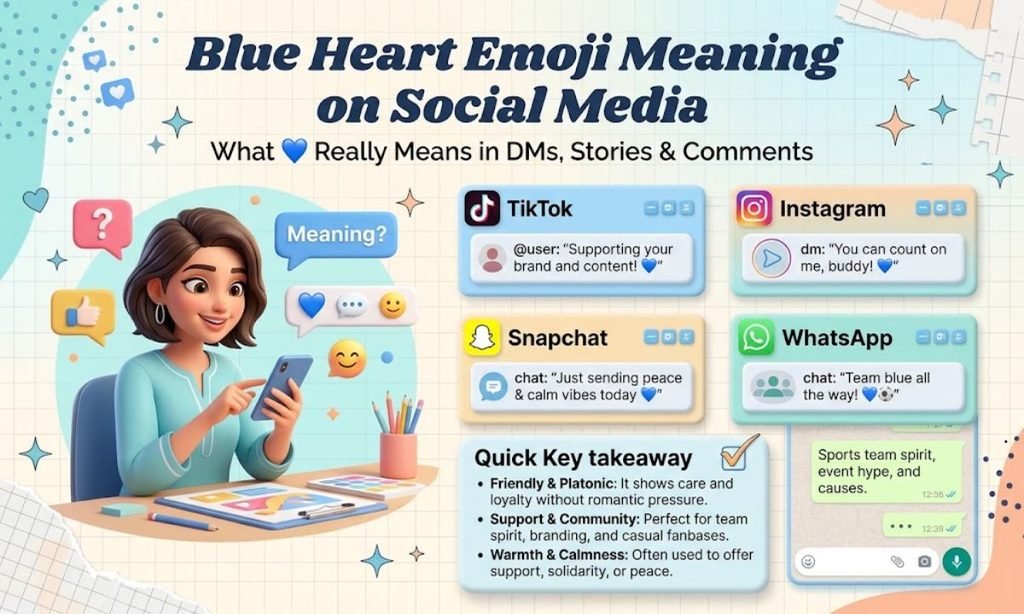
Platform habits shape how this emoji gets used just as much as personal relationships do.
On Instagram, it frequently shows up under posts to express support or admiration without sounding overly romantic, which makes it popular for commenting on a friend’s photo. On TikTok, creators and fans often use it to show loyalty to a favorite account or community, sometimes tied to a shared color theme or fandom.
On Snapchat, where hearts also track friendship streaks and closeness, a blue heart in a caption tends to lean toward calm, easygoing affection rather than anything intense. On Facebook, older and more mixed age audiences often use it simply as a softer alternative to the standard red heart when reacting to posts about family, causes, or good news.
Across every platform, the blue heart also gets adopted for causes such as mental health awareness and autism awareness campaigns, since its calm tone fits supportive messaging well.
Blue Heart vs Other Heart Emoji Colors
Comparing colors side by side makes the intent behind each one much clearer.
| Heart Emoji | Common Meaning |
| Red heart | Passionate romantic love |
| Blue heart | Trust, loyalty, calm support |
| Yellow heart | Friendship and happiness |
| Purple heart | Compassion, sensitivity, sometimes admiration |
| White heart | Purity, remembrance, or a clean gentle affection |
| Black heart | Dark humor, edgy affection, or grief |
Compared to red, blue almost always feels less charged and more grounded, which is exactly why people reach for it when they want warmth without overstating their feelings.
Is the Blue Heart Emoji a Sign of Love
It can be, but it rarely means the same thing as “I love you” the way a red heart typically does. It tends to say “I care about you” in a steadier, less dramatic way, which makes it a common choice between close friends, family, and even new couples who are not ready for a bigger declaration yet.
Over time, if a couple keeps using it consistently, it can become their own private symbol of comfort and stability rather than a downgrade from red.
The Psychology Behind Why Blue Feels Calm and Trustworthy
Color psychology plays a real role here. Blue is widely associated with calmness, stability, and dependability, both in branding research and everyday perception, which is part of why banks, tech companies, and healthcare brands lean on blue so heavily.
That same association carries over into emoji use, making the blue heart feel steady and safe rather than urgent or overwhelming. It reads as reassurance more than excitement, which fits perfectly with its everyday role in supportive messages.
Blue Heart Emoji in Business and Brand Messaging
Brands and creators use the blue heart strategically, not just casually. Companies whose logos or themes are blue often use it in captions and replies to reinforce brand identity while still feeling personal and approachable.
Customer support teams sometimes add it to close out a helpful interaction, since it reads as caring without feeling overly familiar. Community managers also use it to thank followers or highlight loyal fans, especially inside fandoms and sports communities that already use blue as a shared color.
Cultural and Regional Differences in Blue Heart Usage
Usage is not identical everywhere. In some regions and online communities, blue is tied to specific causes, such as autism awareness or water conservation campaigns, which shifts how the emoji gets read in that context. In other cultures, blue carries associations with calm, protection, or even mourning traditions, which can add a slightly different emotional layer than the more universal “trust and loyalty” reading common in English language texting.
When talking with someone from a different cultural background, it is worth reading their intent from the full conversation rather than assuming a single fixed meaning.
Common Mistakes People Make When Reading This Emoji
A few habits lead people to misread this symbol more often than they realize.
- Assuming it always means romantic interest, when it usually signals friendship or support
- Ignoring the rest of the conversation and focusing only on the emoji itself
- Comparing it directly to a red heart instead of reading it on its own terms
- Overanalyzing a single use instead of looking at patterns over time
- Forgetting that platform habits and personal texting style change its weight
Avoiding these mistakes leads to a much more accurate read of what someone actually means.
How to Reply to a Blue Heart Emoji the Right Way
Matching tone is usually the safest approach. If the goal is to stay friendly, replying with a simple thank you, a matching blue heart, or a warm short message keeps things comfortable. If there is genuine interest in taking things further, pairing a reply with a slightly warmer word choice, a question, or an invitation to talk more can gently test the waters without overcommitting.
If the goal is to avoid sending a romantic signal, sticking to a plain thank you or a non heart emoji, such as a smiley or a thumbs up, keeps the reply clearly platonic.
Quick Guide to Blue Heart Emoji Meanings
| Situation | Likely Meaning |
| Friend sends it | Friendship and support |
| Crush sends it | Soft affection, context dependent |
| Partner sends it | Calm devotion and loyalty |
| Family sends it | Unconditional love and support |
| Coworker sends it | Friendly appreciation |
| Instagram comment | Support or admiration |
| Fandom or team post | Shared loyalty and identity |
This table works well as a quick reference for anyone unsure how to read a specific message.
Frequently Asked Questions
What does the blue heart emoji mean?
It generally represents trust, loyalty, and calm support rather than intense romance.
What does it mean in texting?
In a text, it usually softens the message and signals genuine warmth or appreciation.
Does it mean love?
It can, but it points to steady, comfortable affection rather than passionate romantic love.
What does a blue heart mean from a girl?
It most often shows friendship or appreciation, though it can carry light romantic interest with other signals.
What does a blue heart mean from a guy?
It typically signals care in a lower key way, sometimes used as a safer first step before showing clearer interest.
Is it a friend zone emoji?
Not exactly. It leans platonic by default, but consistent use alongside other signals can hint at more.
What is the difference between the blue heart and the red heart?
The red heart signals strong romantic passion, while the blue heart signals calmer trust and loyalty.
Conclusion
The blue heart emoji earns its popularity because it fills a gap the red heart cannot: a way to show real care without overstating feelings. Whether it shows up from a best friend, a family member, or someone new, reading it alongside the full conversation, the platform, and the relationship will always give a clearer answer than judging the symbol on its own.
