


Seen “BPM” in a chat and not sure what it means? You are not alone, because this short acronym shows up in music, health, business and everyday messages. The right meaning depends on who sends it and where.
In text, BPM almost always means “beats per minute.” People use it to talk about song speed, heart rate or a racing pulse after a crush texts back. It is simple once you see the context.
This guide explains every common meaning of BPM, with real chat examples and easy replies. You will also learn normal heart rate ranges and how BPM is used at work. Let’s start with the basics.
BPM Meaning: A Quick Overview
BPM most often stands for beats per minute. It counts how many beats happen in 60 seconds, whether in a song or in your heart.
Common Meanings of BPM
| Meaning | Where You See It |
| Beats per minute | Music, fitness, health apps, chats |
| Business Process Management | Workplace and software discussions |
| Breaths per minute | Medical and fitness notes |
| Bytes per minute | Technical or computing contexts |
Beats per minute is the meaning you will meet in nearly every casual text.
BPM Explained in Simple Terms
Think of BPM as a speed counter. A higher number means faster beats, and a lower number means slower beats.
BPM Examples in Everyday Use
- “This track is 128 BPM, perfect for the gym.”
- “My heart rate hit 150 BPM on that run.”
- “Seeing your name pop up? My BPM just doubled 😅”
- “We need a BPM tool to map our approval steps.”
The Origin and Evolution of BPM
BPM started as a way to measure time and rhythm. It later spread into health, business and online talk.
The Musical Origins of BPM
Musicians needed a shared way to describe speed. The metronome, developed in the early 1800s, gave them a steady click to count beats per minute.
Today, producers and DJs still use BPM to label tempo.
How BPM Became Common in Medicine
Doctors count heartbeats per minute to check how the heart is working. Pulse counts became a routine part of checkups, and fitness watches now show the number all day.
BPM in the Digital Age and Internet Culture
Wearables put BPM on every wrist, so people now share heart rate numbers and joke about their pulse in chats.
BPM in Business and Corporate Environments
In offices, BPM can mean Business Process Management. It is a way of mapping, improving and automating how work flows through a company.
BPM in Real-Life Conversations
BPM shows up on every major chat app. The meaning stays the same, but the style changes by platform.
Using BPM in WhatsApp Chats
On WhatsApp, friends share songs and workout stats. Example: “That playlist is 100 BPM, perfect for the drive.”
Using BPM in Snapchat Chats
On Snapchat, BPM often appears as a joke over a photo. Example: “Heart at 140 BPM after that jump scare.”
BPM in Instagram Direct Messages
In DMs, BPM often comes with music or a crush. Example: “Your story made my BPM go up.”
How BPM Appears in TikTok Comments
TikTok users mention BPM when they talk about a sound or dance. Example: “This beat is 120 BPM, easy to dance to.”
BPM in Everyday Text Messages
In a plain text, BPM is usually figurative. Example: “Waiting for your reply, my BPM is through the roof.”
The Emotional and Psychological Impact of BPM
BPM links to feelings because both music and the heart follow a rhythm. Faster rhythms often feel more energetic.
How Music Tempo Influences Mood
Upbeat tracks tend to lift energy, while slower songs often feel calm. That is why workout playlists favor a faster tempo.
The Link Between Heart Rate and Emotions
Excitement, stress and fear can raise your pulse. Rest and calm usually bring it down.
BPM and Psychological Associations
People link a “fast BPM” with excitement or nerves. In chats, saying your BPM is high usually means you are excited or flustered.
Meaning of BPM in Health
In health, BPM is your heart rate in beats per minute. A normal resting heart rate for most adults is 60 to 100 BPM.
| Measure | Typical Guide |
| Resting heart rate (adults) | 60 to 100 BPM |
| Estimated maximum heart rate | 220 minus your age |
| Target exercise zone | 50 to 85 percent of maximum |
How BPM Is Used in Different Contexts
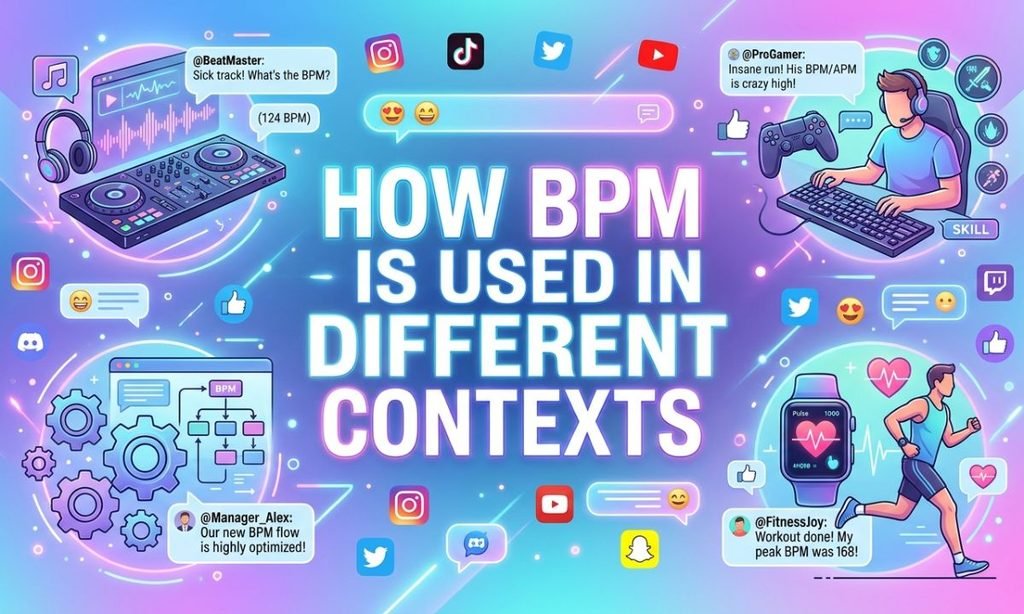
The same acronym can sound playful or serious. Tone and setting decide the meaning.
BPM Usage on Social Media
Creators use BPM for music edits and fitness posts. Captions often include a tempo or a heart rate number.
BPM Among Friends and in Relationships
Friends use BPM as a joke about nerves or excitement. In romantic chats, it can signal that someone is flustered by attention.
BPM in Professional and Workplace Settings
At work, BPM usually means Business Process Management. Spell it out the first time so colleagues do not guess.
Understanding Casual and Serious Uses of BPM
Casual use is playful, like “My BPM is racing 😂.” Serious use is factual, like “Resting BPM: 72” or “BPM software rollout.”
Common Misconceptions About BPM
A few myths cause confusion. Here are the main ones.
Why BPM Is Not Just About Music
BPM measures any repeating beat. It applies to hearts, breathing and even business workflows with a different meaning.
Does a High BPM Always Indicate a Problem?
No. Exercise, caffeine, stress and excitement can all raise your pulse for a short time. A persistently high resting rate or other symptoms should be checked by a doctor.
Why Not Every Song Needs a High BPM
Fast is not always better. The best tempo depends on the mood.
Common Mistakes When Using BPM
- Using BPM at work without explaining which meaning you intend.
- Mixing up heart rate BPM with music tempo BPM.
BPM Meanings Compared Across Different Contexts
| Context | What BPM Measures | Example |
| Music | Song tempo | “House tracks often run near 120 to 130 BPM” |
| Health | Heart rate | “Resting heart rate: 68 BPM” |
| Fitness | Exercise intensity | “Stay in your target zone” |
| Business | Process Management | “Our BPM team maps workflows” |
| Social chats | Figurative excitement | “My BPM just spiked” |
Different Types and Applications of BPM
BPM has many uses, and each one has its own purpose.
Resting Heart Rate (BPM)
This is your pulse while calm and still. For most adults, the normal range is 60 to 100 BPM.
Active Heart Rate (BPM)
This is your pulse during movement. It rises as your body needs more oxygen.
Target Heart Rate (BPM)
This is the zone you aim for during exercise. A common guide is 50 to 85 percent of your estimated maximum heart rate.
BPM in Song Tempo
Every song has a tempo. It tells you how fast the beat moves.
BPM in Dance Music
Dance genres often use steady, fast tempos. This keeps people moving on the dance floor.
BPM for DJ Transitions and Mixing
DJs match the BPM of two songs so that the beats line up. This makes the switch sound smooth.
BPM for Meditation and Relaxation
Calm sessions often use slow music or gentle rhythms. The goal is to help the listener relax.
BPM for Running and Exercise
Many runners choose songs that match their pace. A steady tempo can make it easier to keep rhythm.
BPM in Business Process Management
Here BPM is a discipline for improving how a company works. Teams map steps, find delays and update the process.
BPM in Gaming and Gameplay
Rhythm games depend on tempo. Players hit notes in time with the song.
How to Reply When Someone Mentions BPM
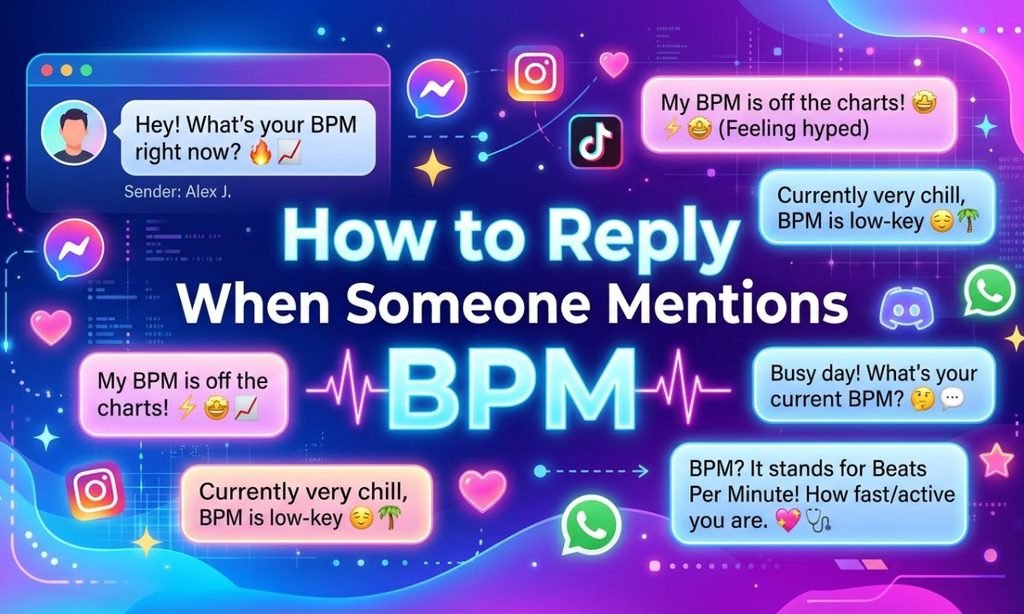
Your reply depends on the tone. Match their mood and keep it simple.
Casual Responses to BPM
- “Same here, mine’s racing too.”
Funny and Playful BPM Replies
- “Careful, we don’t want a heart rate alert 😂”
- “Is that BPM or just my effect on you?”
Mature and Confident Responses
- “Good to know. Want to talk about it later?”
Private and Respectful Ways to Respond
If the topic is health or feels sensitive, move to a private message and show care without prying.
BPM Usage Across Regions and Cultures
BPM is a global term, but it can take different forms. The core idea is the same everywhere.
BPM in Western Culture
In English-speaking countries, BPM is common in music, fitness and tech talk. It also appears in casual chat jokes.
BPM in Asian Communities
In many parts of Asia, BPM appears in music, fitness apps and business software.
BPM in Middle Eastern Communities
Here too, BPM is used mainly in music, health and workplace contexts.
BPM Across Global Internet Communities
On global platforms, BPM works as shared shorthand. In French, the phrase “battements par minute” gives the same abbreviation.
Conclusion
BPM most often means beats per minute, whether for a song, a heart rate or a joke about nerves. It can also mean Business Process Management at work.The meaning changes with the topic, so the same three letters can point to music, health or office work.
Check the context before you reply. Use a playful tone in casual chats, and spell out the term in professional messages. A quick question like “Do you mean beats per minute?” avoids confusion and keeps the chat friendly.
Frequently Asked Questions
What Does BPM Stand for in Music?
BPM stands for beats per minute, the speed of a song’s tempo. Higher numbers mean faster music.
What Is a Normal Heart Rate in BPM?
A normal resting heart rate for most adults is 60 to 100 BPM. It can vary with fitness, age and health.
Is a Higher BPM Better for Workouts?
Not always. Aim for your target zone, about 50 to 85 percent of your maximum heart rate.
What Does BPM Stand for in Business?
In business, BPM means Business Process Management. It focuses on improving how work flows through a company.
Can Your BPM Indicate Stress Levels?
Yes, stress can raise your heart rate for a while. It is only one sign, so look at the full picture.
What Is the Ideal BPM for Running?
For heart rate, aim for your target zone, about 50 to 85 percent of your maximum. For music, pick a tempo that matches your pace.
Is a Low Resting Heart Rate a Good Sign?
Often yes, especially in fit people. If you feel dizzy or faint, see a doctor
