

If you have scrolled through TikTok comments, a group chat, or a gaming server lately, there is a good chance you have run into the letters SYBAU and wondered what on earth they mean. It looks random at first glance, almost like a typo or a username, but it is neither.
SYBAU is one of the fastest spreading pieces of internet slang right now, and it carries a sharper tone than most casual abbreviations. This guide breaks down the sybau meaning in plain language, where it comes from, how each platform uses it differently, and how to respond if someone sends it to you.
What Does SYBAU Mean
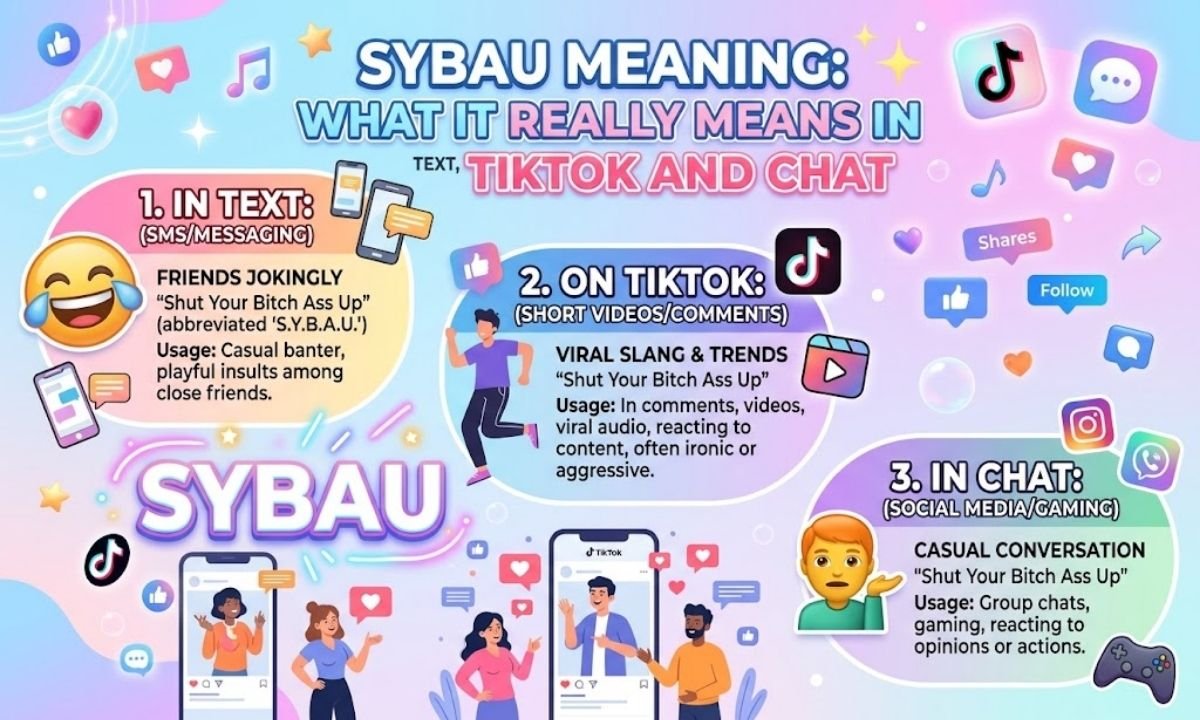
SYBAU is a censored acronym for a rude way of telling someone to be quiet. People use it when they want to shut down an argument, mock a comment, or react to something they find annoying or ridiculous, usually with a mix of humor and attitude rather than pure hostility.
What Does SYBAU Stand For
The letters expand to a phrase that is essentially a harsher version of “shut up,” with an added insult worked into the middle of it. Most dictionaries and slang trackers list it as a compressed, spelled out way of saying “shut your backside up,” softened here because the original phrase includes explicit language.
Writers and creators almost always abbreviate it rather than spell it out, partly out of habit and partly to avoid content filters on major apps.
SYBAU Meaning in Text Messages
In one-on-one texting, SYBAU usually shows up as a reaction rather than an opener. Someone sends a bold claim, an exaggerated brag, or a bad joke, and the reply is a single word: sybau. Between friends, this reads as teasing. From someone you barely know, the same word can land as genuinely disrespectful, which is why tone and history between the two people matter more than the word itself.
Common texting patterns include:
- A short, standalone reply to a joke or brag
- Paired with a laughing emoji or skull emoji to soften the blow
- Used mid-argument, where it is meant to be dismissive rather than funny
- Sent in all caps for extra emphasis during a heated exchange
SYBAU Meaning on TikTok
TikTok is where this term exploded. It regularly appears in comment sections under videos involving drama, unpopular opinions, or overly confident claims. Commenters use it to shut down a take they disagree with, often stacked with other trending shorthand like TS or PMO to create the exaggerated, slang-heavy style TikTok users now call brainrot humor.
Creators lean into it for comedic effect too, using the term in captions or stitched reaction videos where the joke is the term itself rather than any real anger. Because TikTok actively filters explicit language, coded acronyms like this one let users express the same sentiment without tripping moderation systems, which is a big part of why it caught on so widely on that platform specifically.
SYBAU Meaning on Snapchat, Instagram and Discord
Snapchat and Instagram usage mirrors texting more than TikTok commenting. On Snapchat, it shows up in captions and quick replies, often as a joke aimed at a friend’s story. On Instagram, it appears in comment sections and DMs, usually reacting to a post that seems overly dramatic or attention seeking.
Discord and gaming chats give the term a slightly different flavor. In voice-chat-adjacent text channels, players type it during banter, losses, or trash talk. It functions almost like a digital eye roll, dismissive but usually not meant to end the friendship over a match.
Is SYBAU Rude or Offensive
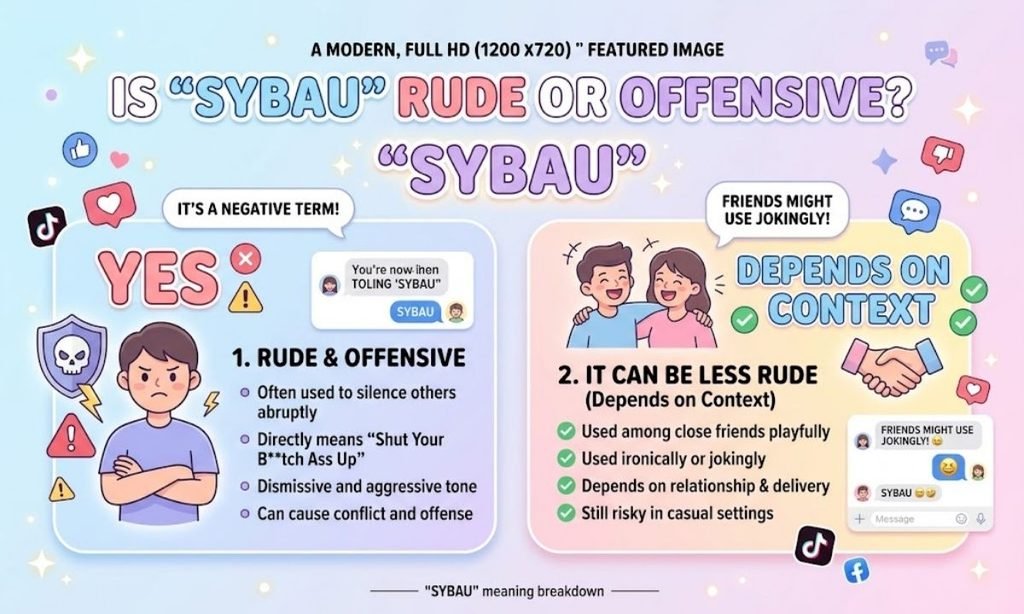
Yes, at its root the phrase is an insult, and dictionaries that track slang classify it as an aggressive way to tell someone to stop talking. That said, actual usage online splits fairly evenly between genuine hostility and friendly ribbing, so context always decides how it lands.
- It reads as a joke when: it is used between established friends, it comes with a laughing reaction, or it is clearly responding to something silly rather than something hurtful.
- It reads as rude when: it is sent to a stranger, it appears mid-argument with no humor attached, or it is used to shut down a serious or emotional message.
SYBAU Examples in Conversations
Real usage helps make the tone clearer than any dictionary definition can.
Funny example between friends: Friend A: “I could beat you in a race easily.” Friend B: “sybau you lost the last three.”
Argument example: Person A: “You never listen to anything I say.” Person B: “sybau, I literally just agreed with you.”
Comment section example: Video caption: “Pineapple belongs on pizza.” Top comment: “sybau 💀”
How to Reply When Someone Says SYBAU
Reacting well usually comes down to reading the room first.
- Funny reply: mirror the energy with a joke back, such as agreeing sarcastically or sending an exaggerated reaction.
- Calm reply: a simple laughing response or ignoring it entirely works fine if the exchange is clearly lighthearted.
- When not to reply: if the word is used aggressively by someone you do not know well, disengaging is usually the better move than escalating.
Where Did SYBAU Come From
The phrase itself is much older than its current viral moment. Slang dictionaries have entries for the full phrase dating back to the early 2000s, long before TikTok existed. The abbreviated form picked up steam again roughly around 2021 through 2022 in comment sections and meme captions, then surged into mainstream visibility in late 2024 and through 2025 as TikTok creators folded it into a wider wave of compressed, coded slang.
SYBAU vs Similar Slang Terms
The table below compares SYBAU with a few other common “be quiet” style expressions used online.
| Term | Full Meaning | Typical Tone | Common Platform |
| SYBAU | Rude, insult-based way to say shut up | Aggressive or joking depending on context | TikTok, Snapchat, Discord |
| STFU | Direct, blunt way to say shut up | Mostly aggressive, less playful | Texting, forums, gaming |
| Be quiet | Neutral, polite request for silence | Calm, non-confrontational | Everyday conversation |
| Zip it | Casual, mild way to ask someone to stop talking | Light, often humorous | Texting, in-person chat |
SYBAU Across Different Platforms and Moods
Because the same word can mean very different things depending on where it shows up, this table breaks down the general tone by platform based on how the term tends to be used in each space.
| Platform | Typical Use Case | Usual Tone |
| TikTok comments | Reacting to an opinion or drama clip | Mocking, comedic |
| Texting between friends | Responding to a brag or joke | Playful |
| Discord and gaming chats | Trash talk after a match | Competitive banter |
| Instagram DMs or comments | Reacting to dramatic posts | Mixed, sometimes sharp |
Why Is SYBAU So Popular Online
Short, coded insults spread quickly because they are fast to type, easy to remember, and slightly rebellious sounding without actually spelling out anything explicit. Gen Z online culture in particular favors compressed language that outsiders find confusing, which gives the term an extra layer of appeal as an in-group signal.
It also survives content moderation systems that would otherwise flag the spelled-out phrase, which keeps it circulating freely across comment sections that heavily police explicit language.
SYBAU in Pop Culture and Trending Discourse
The term has jumped well beyond random comment sections and now appears attached to specific pop culture moments, reality TV recaps, and celebrity discourse threads on X and TikTok.
Fans use it to react to plot twists, spoilers, or opinions about reality shows and celebrity drama, which has helped push it from niche slang into something closer to a mainstream reaction word during 2025 and into 2026.
Is SYBAU Appropriate for Brands and Businesses
Brand accounts occasionally borrow trending slang to sound current, but this particular term is risky territory. Because the underlying phrase is an insult, most social media managers treat it as off-limits for official brand voice, reserving it at most for internal team chats rather than public-facing captions or replies.
The Psychology Behind Why Insult Slang Goes Viral
Researchers who study online language point out that mild, coded insults give people a low-stakes way to express frustration or humor without real confrontation. The abbreviation softens the aggression just enough that it reads as playful in most contexts, which is exactly why terms like this spread faster than their fully spelled-out originals ever could.
How Parents and Teachers Can Respond to It
Adults who hear kids or students using this word are often more alarmed by the tone than the actual content, since most young users treat it as a throwaway reaction rather than a genuine insult. Calmly asking what a term means, rather than reacting with shock, tends to open a more useful conversation than an outright ban on the word.
Common Misunderstandings About SYBAU
A few myths circulate alongside the term itself.
- It does not have multiple unrelated meanings; alternate “clean” versions people share online are usually jokes rather than real definitions.
- It is not a brand-new invention of TikTok; the underlying phrase predates the app by roughly two decades.
- It is not automatically an attack; plenty of daily usage is closer to a verbal shrug than a genuine insult.
When Should You Avoid Using SYBAU
There are a few settings where reaching for this term is a bad idea regardless of how normal it feels online.
- At work, school, or in any formal writing, since the underlying phrase is considered profanity
- With someone you do not know well, since tone cannot be read the way it can with close friends
- During a genuinely serious or emotional conversation, where dismissive slang tends to make things worse
Conclusion
SYBAU has grown from an old internet forum insult into one of the most recognizable pieces of slang on TikTok, Snapchat, and gaming chats today. The core meaning stays rude at its root, but everyday usage leans playful far more often than hostile, which is exactly why context, tone, and the relationship between the two people matter more than the letters themselves.
Knowing the sybau meaning, where it came from, and when to avoid it makes it much easier to read a chat correctly the next time it shows up.
Frequently Asked Questions
What does SYBAU mean in text?
It is a rude, shortened way of telling someone to be quiet, usually sent as a quick reaction to a joke, brag, or argument.
What does SYBAU stand for?
It stands for a censored, insult-based version of “shut up,” with explicit wording tucked into the middle of the phrase.
Is SYBAU a bad word?
Yes, the full phrase behind it counts as profanity, even though the abbreviation itself looks harmless on screen.
What does SYBAU mean on TikTok?
On TikTok it mostly appears in comments, used to mock or dismiss an opinion, often mixed with other trending slang for comedic effect.
What does SYBAU mean on Snapchat?
On Snapchat it usually shows up in captions or quick replies between friends, closer to a joke than a genuine insult.
Is SYBAU an insult?
At its root, yes, but daily usage online splits between real hostility and playful teasing depending on who is saying it.
Can SYBAU be used jokingly?
Yes, among close friends it is very often used as a lighthearted jab rather than a serious put-down.
